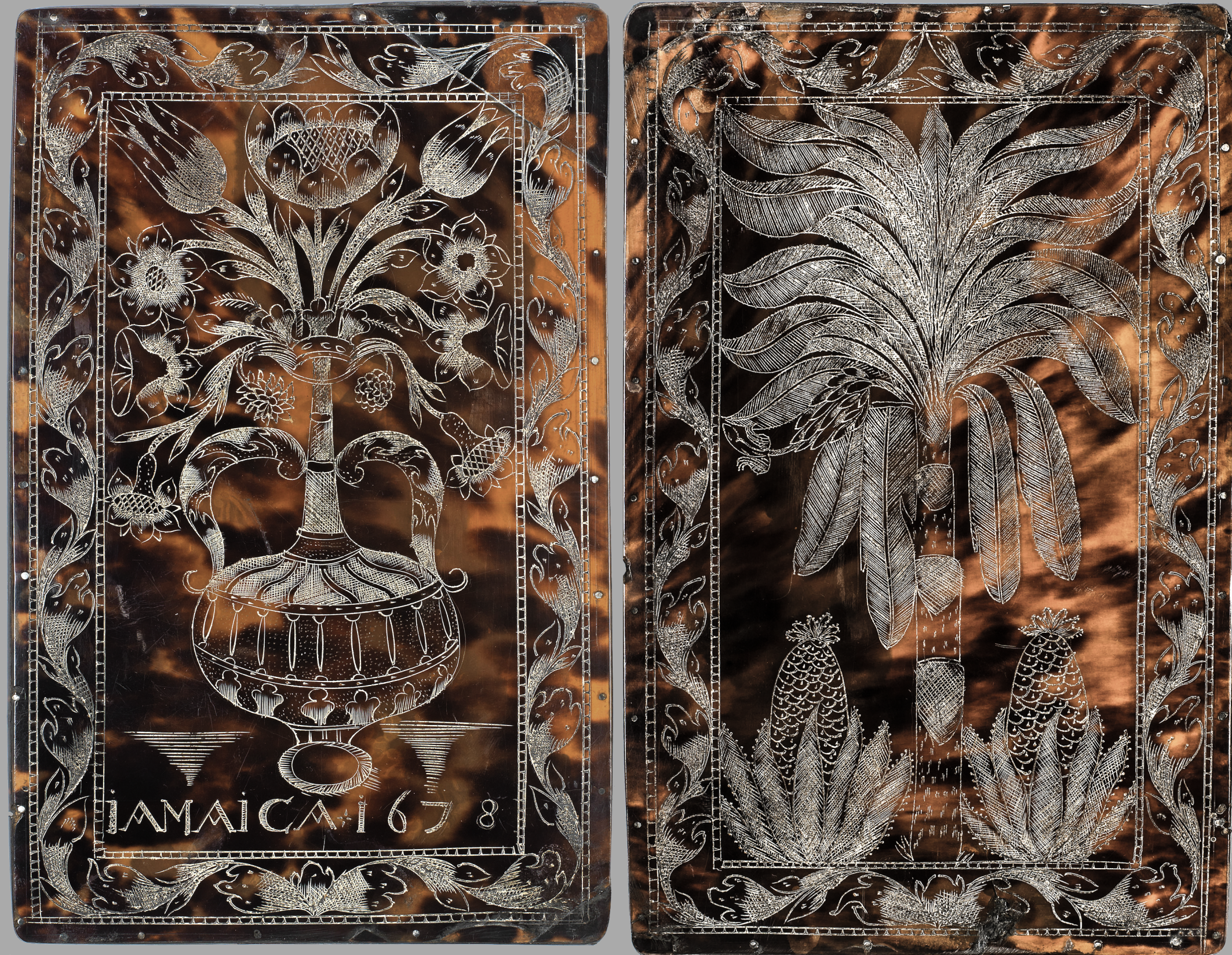
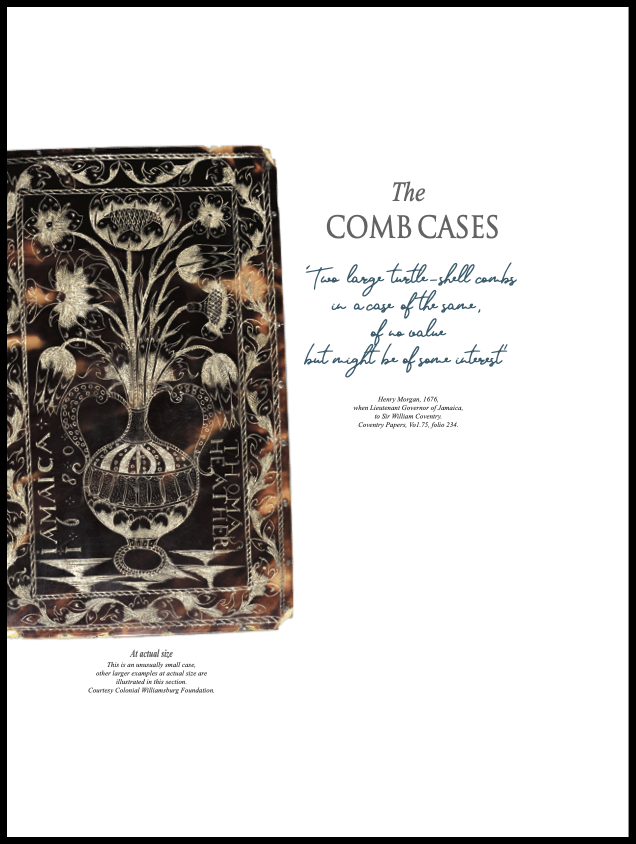
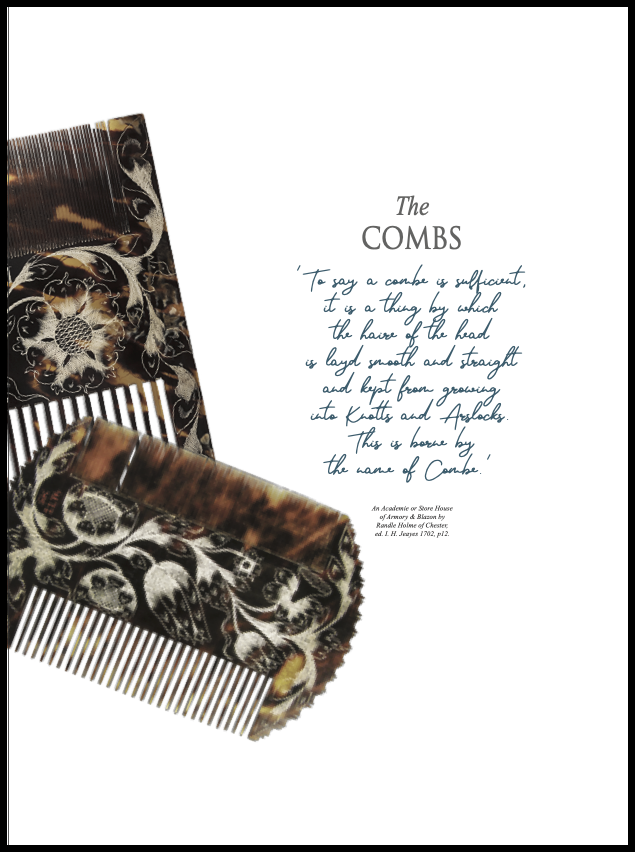
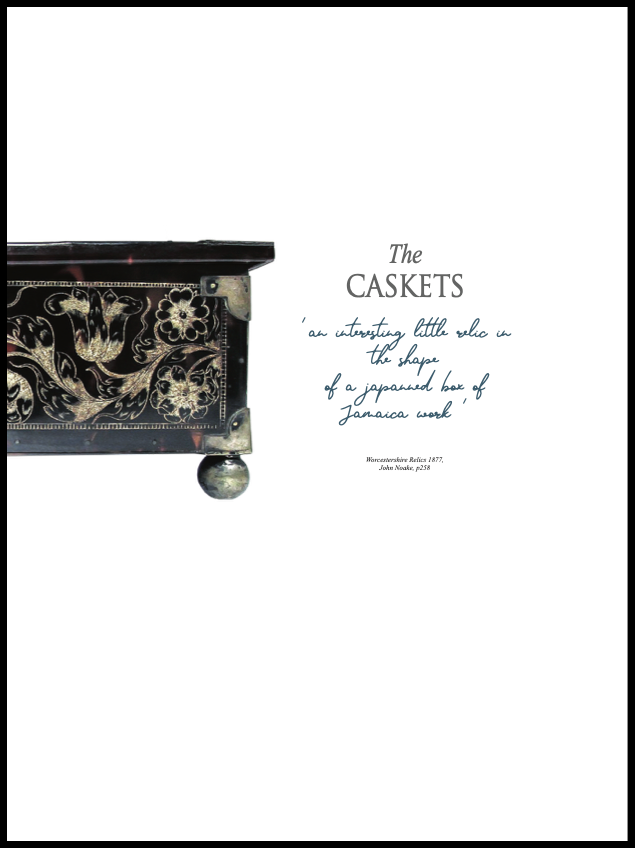
In this book, for the first time are recorded one hundred pieces of this wonderful, naively engraved tortoiseshell created in Port Royal, Jamaica between 1670 and 1692. Traced to museums, private collections and auction houses from across the world, at least one dated item from every year of production has been recorded, often many more, along with undated items.
‘Probably the earliest art objects made in the British West Indies displaying European influence’.
Frank Cundall
‘There is so much we will never know due to the earthquake's devastations, and it is the author's prerogative to speculate in the absence of firm evidence.’ Dr David Boxer, late Director of the National Gallery of Jamaica, 2008.
This first exhaustive overview of this period has allowed an examination of the form, construction and use of the items, imagery, their possible antecedents, makers and an investigation into the progression of the engraved images over the period, which ended so catastrophically with the earthquake of 1692.
In this robust and remote corner of ‘The New World’ a small number of craftsmen developed an extraordinary talent for making and engraving exquisite items from tortoiseshell.
Engraved Tortoiseshell from Port Royal Jamaica,1670-1692
488 pages, full colour, casebound
Text © 2026 Barbara Leigh
Design © 2026 Candy Butler
ISBN: 978-1-0369-5049-1
Dimensions: 305 × 230 × 40mm, 12” × 9” × 1.5” approx
Weight: 2760gm, 6lbs 1oz
A Few Reviews
“WOW…… Its going to be some reading what a fantastic publication you must be super proud.”
“Just received the book and it’s really wonderful. It looks fascinating and is beautifully produced. I have a large reference library and it is the sort of book I treasure.”
“Your magnificent book just received, … such a fascinating subject”
“This one is for me/my reference library.”
“What I find even more impressive is they manner in which you used the subject of the manufacture of items of tortoiseshell in Port Royal as a means of bringing to life the early history of Jamaica, the European exploration and colonization of the Caribbean and the importance of the Atlantic trade, not to mention the life and times of the late 17th century and all the design sources for the engravings.”
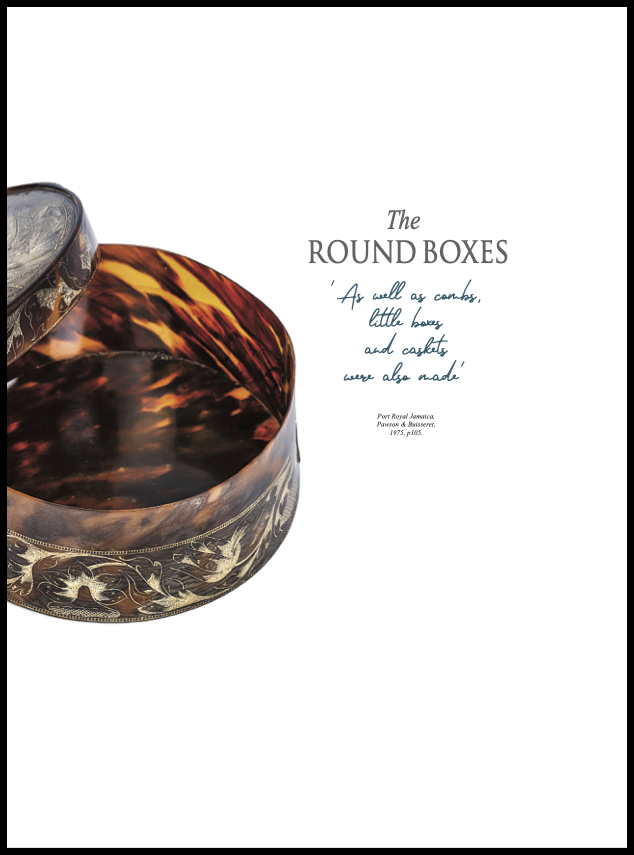
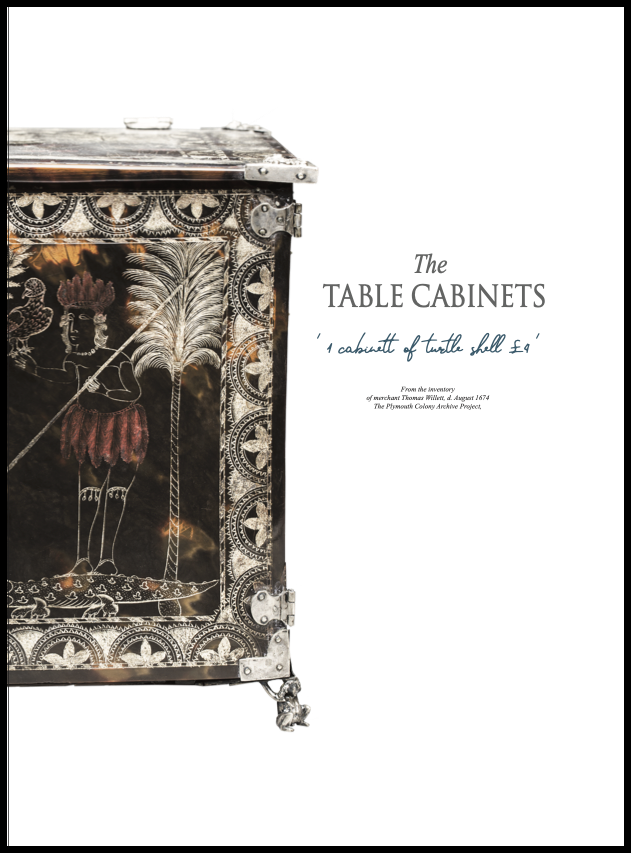
Images courtesy private collection, UK